
Notifications
Clear all

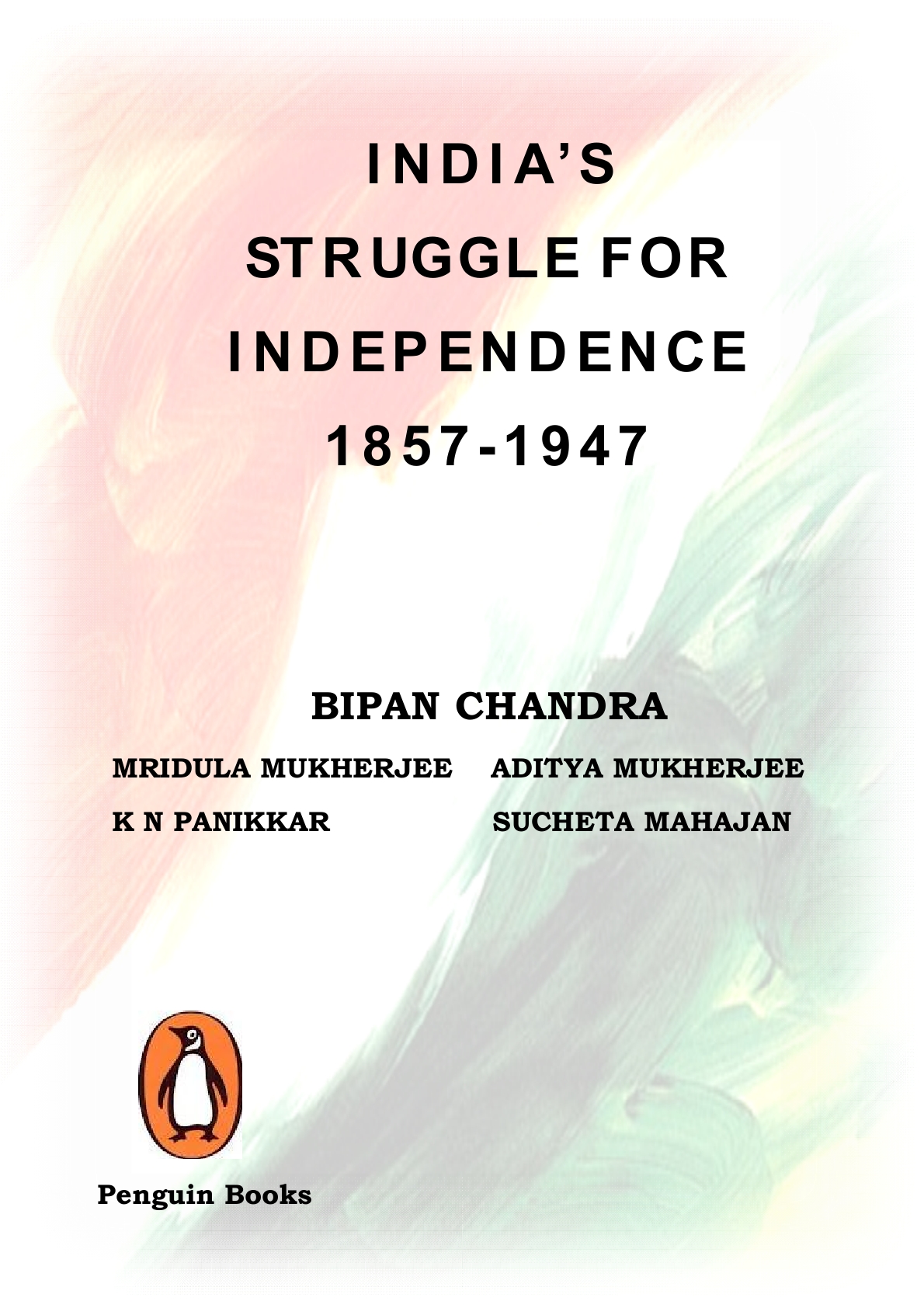
India's Struggle for Independence By Bipan Chandra
Overview of the Book
India's Struggle for Independence by Bipan Chandra presents a detailed account of the Indian national movement against British colonial rule. The book covers the political, social, and economic developments that shaped the struggle from the nineteenth century to independence in 1947. Moreover, it examines the emergence of Indian nationalism and explains how different groups contributed to the freedom movement.
The authors place particular emphasis on the Indian National Congress, its changing strategies, and its major leaders. Furthermore, the book examines the ideas and political methods of leaders such as Mahatma Gandhi, Jawaharlal Nehru, Subhas Chandra Bose, Bal Gangadhar Tilak, and other prominent figures.
Rise of Indian Nationalism
Early Nationalist Movement
The book explains the growth of political awareness under British rule. Initially, educated Indians demanded administrative reforms and greater political representation. However, nationalist politics gradually became more assertive. Consequently, movements such as the Swadeshi Movement expanded public participation and strengthened opposition to colonial policies.
Gandhian Era
Gandhi transformed the character of the nationalist movement by introducing mass-based political campaigns. In addition, the authors discuss major movements such as the Non-Cooperation Movement, Civil Disobedience Movement, and Quit India Movement. Meanwhile, peasants, workers, students, women, and other social groups increasingly participated in political activity.
Major Themes of the Book
Bipan Chandra and his co-authors examine the relationship between nationalism and colonialism. They also explore debates within the Congress and differences among various political groups. Furthermore, the book discusses revolutionary movements, communal politics, the role of the Muslim League, and the circumstances that eventually led to partition.
Towards Independence
The final sections describe the political developments of the 1940s. Moreover, the book examines the impact of the Second World War, the Quit India Movement, negotiations with the British government, and the growing demand for Pakistan. Eventually, political disagreements and communal tensions contributed to the partition of British India in 1947.
Important Features
-
Covers the Indian national movement in chronological order.
-
Explains the development of Indian nationalism.
-
Discusses major Congress movements and strategies.
-
Examines Gandhi's role in mass politics.
-
Covers revolutionary and socialist movements.
-
Discusses the role of workers, peasants, students, and women.
-
Explores the politics of the Muslim League.
-
Examines communal politics and partition.
-
Provides historical context for major political events.
-
Useful for CSS, PMS, history, and political science students.
Why This Book Is Useful
The book provides a broad framework for understanding India's independence movement. Therefore, students can use it to connect political events with wider social and economic developments. In addition, its discussion of competing political ideas helps readers understand the complexity of the nationalist struggle. Consequently, it serves as a valuable reference for students preparing history, political science, and competitive examinations.
Topic starter
Posted : September 21, 2026 8:35 am