
Notifications
Clear all

Discovering Islam Making Sense of Muslim History and Society Akbar S. Ahmed
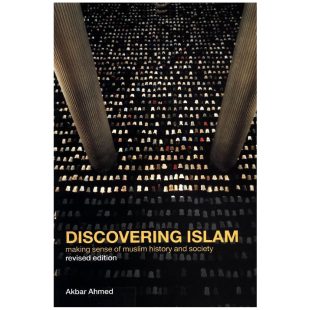
Discovering Islam: Making Sense of Muslim History and Society
Introduction
Discovering Islam: Making Sense of Muslim History and Society by Akbar S. Ahmed offers an accessible exploration of Islam, Muslim history, and contemporary Muslim societies. The book helps readers understand Islam through its historical development, social structures, cultural traditions, and interaction with the modern world. Ahmed connects historical events with present-day Muslim experiences, making the subject easier for students and general readers to understand.
Understanding Muslim History and Society
Ahmed examines major developments in Muslim history and explains how political, social, and cultural changes shaped Muslim societies. He discusses the diversity within the Muslim world and shows how geography, traditions, political institutions, and historical experiences influence Muslim communities.
The book also encourages readers to look beyond simplified views of Islam. Ahmed presents Islam as a living tradition with different interpretations and social expressions. His discussion provides useful context for understanding the relationship between Islamic principles and the everyday lives of Muslims.
Islam in the Modern World
A major strength of the book lies in its discussion of modern Muslim societies. Ahmed considers questions surrounding modernization, identity, tradition, and social change. He explores how Muslims respond to changing political and cultural environments while maintaining connections with their religious and historical heritage.
The book also helps readers examine relations between Muslim societies and the West. Ahmed addresses common misunderstandings and encourages a more informed understanding of Islamic civilization and Muslim social life.
Important Features of the Book
- Explains Muslim history and society in an accessible manner.
- Examines Islam within its historical and cultural context.
- Highlights diversity among Muslim societies.
- Discusses tradition, modernization, and social change.
- Explores Muslim identity in the contemporary world.
- Examines interactions between Islam and Western societies.
- Connects historical developments with modern social issues.
- Challenges simplistic interpretations of Muslim societies.
- Provides useful background for students of Islam and social sciences.
- Encourages comparative and critical thinking about Muslim history.
Academic and CSS Relevance
This book can support students of Islamic Studies, Political Science, International Relations, Sociology, and History. CSS and other competitive-exam aspirants can use its ideas to strengthen their understanding of Muslim societies, Islamic civilization, identity, modernization, and contemporary Muslim-Western relations. Its broad social and historical perspective also provides useful concepts for analytical answers and essay writing.
Topic starter
Posted : September 21, 2026 10:50 am