
Notifications
Clear all

The Evolution of the Concept of Bureaucracy
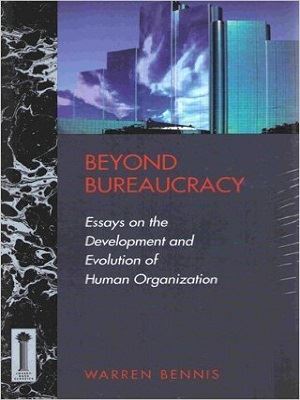
Bureaucracy has remained an important concept in the study of management, administration, and organizational behavior. Warren Bennis examines how traditional bureaucracy developed and why modern organizations increasingly need more flexible structures. Initially, theorists viewed bureaucracy as a rational system that could create order, consistency, and efficiency. However, Bennis argues that changing social, technological, and organizational conditions challenge the traditional bureaucratic model.
Traditional Concept of Bureaucracy
Traditionally, bureaucracy emphasized hierarchy, formal rules, specialization, authority, and clearly defined responsibilities. Moreover, organizations relied on established procedures to coordinate employees and maintain control. Therefore, managers could create predictable systems in which each employee understood their duties and reporting relationships.
However, excessive reliance on rules could restrict creativity and slow decision-making. Consequently, employees might focus more on following procedures than solving new problems. Furthermore, rigid hierarchies could limit communication between different organizational levels.
Warren Bennis and the Changing Organization
Bennis explains that modern organizations face rapid technological, social, and economic changes. As a result, organizations need structures that can respond quickly to new circumstances. Similarly, complex problems often require cooperation among specialists rather than strict adherence to hierarchical authority.
In addition, modern organizations increasingly value adaptability, teamwork, communication, and innovation. Thus, Bennis presents a movement away from rigid bureaucratic structures toward more flexible organizational arrangements. Nevertheless, he does not suggest that organizations should abandon structure completely. Instead, he emphasizes structures that can support changing needs while maintaining organizational coordination.
Important Features
-
Focus on organizational change and adaptability
-
Criticism of rigid bureaucratic structures
-
Greater emphasis on flexibility
-
Importance of teamwork and collaboration
-
Reduced dependence on strict hierarchy
-
Encouragement of innovation and creativity
-
Recognition of technological change
-
Better communication across organizational levels
-
Emphasis on specialized knowledge
-
Greater responsiveness to environmental changes
Relevance to Modern Management
The evolution of bureaucracy remains relevant because organizations now operate in increasingly dynamic environments. For example, technology can rapidly change markets, communication, and workplace practices. Therefore, managers need systems that allow employees to respond effectively rather than simply follow fixed procedures.
Likewise, organizations can combine formal structures with decentralized decision-making. Meanwhile, teams can bring different areas of expertise together to address complex challenges. As a result, organizations can improve responsiveness while still maintaining accountability.
Ultimately, Bennis's discussion shows that bureaucracy must evolve alongside society and technology. Although traditional bureaucracy provides order and stability, excessive rigidity can create organizational limitations. Hence, modern management increasingly seeks a balance between structure and flexibility. Overall, the evolution of bureaucracy demonstrates that successful organizations must adapt their structures to changing environments, employee needs, and technological developments.
Topic starter
Posted : September 19, 2026 10:37 am