
Notifications
Clear all

Topic starter
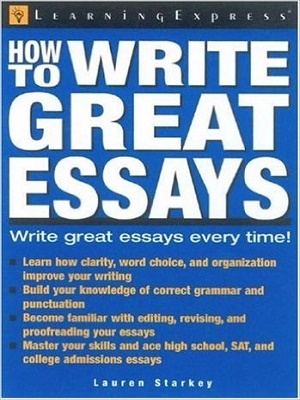
How to Write Great Essays by Lauren Starkey
Introduction
How to Write Great Essays by Lauren Starkey provides practical guidance for students who want to develop stronger academic writing skills. The book explains the essential stages of essay writing, from understanding a topic to planning, drafting, revising, and proofreading. Moreover, it encourages students to communicate their ideas clearly and logically. Therefore, learners can use its practical approach to build confidence and improve their overall essay-writing abilities.
Understanding the Essay
First, effective essay writing begins with a clear understanding of the assigned topic. Students need to identify the question, determine its requirements, and establish a focused direction. Furthermore, understanding the purpose of an essay helps writers select relevant information. For example, an analytical essay requires careful examination of ideas, while a persuasive essay needs logical arguments and supporting evidence.
Planning the Essay
Next, students should create an outline before they begin writing. A well-organized plan helps them arrange their main points in a logical sequence. In addition, it reduces repetition and keeps the discussion focused. Similarly, a strong introduction should establish the subject and present the central argument. Consequently, readers can understand the purpose of the essay from the beginning.
Developing Strong Paragraphs
Each body paragraph should focus on one main idea. Moreover, students should support their claims with relevant examples, explanations, and evidence. However, information alone does not create a strong argument. Writers must explain the connection between evidence and their main point. Meanwhile, transition words can connect ideas and create a smooth flow. As a result, the essay becomes more coherent and easier to follow.
Important Features of the Book
-
Practical guidance on essay writing
-
Techniques for understanding essay topics
-
Useful planning and outlining strategies
-
Guidance on developing strong arguments
-
Advice on paragraph organization
-
Tips for improving clarity and coherence
-
Support for academic writing
-
Strategies for effective introductions and conclusions
-
Guidance on revision and proofreading
-
Suitable for students and essay-writing practice
Revising and Improving
After completing a first draft, students should review their work carefully. Additionally, they should check grammar, spelling, punctuation, sentence structure, and paragraph development. Nevertheless, revision should involve more than correcting errors. Students should also examine whether their arguments remain focused and whether each paragraph supports the thesis. Thus, thoughtful revision can significantly strengthen an essay.
Conclusion
Finally, How to Write Great Essays offers a structured approach to developing effective essays. Through careful planning, logical organization, clear arguments, and regular revision, students can improve their writing skills. Ultimately, consistent practice allows learners to express complex ideas with greater confidence and precision. Hence, the book can serve as a useful resource for students seeking to strengthen their academic essay-writing abilities.
This topic was modified 3 hours ago by manzoor1
Posted : September 17, 2026 7:03 am