
Notifications
Clear all

Do We Require Additional Provinces in Pakistan? The Case for Good Governance
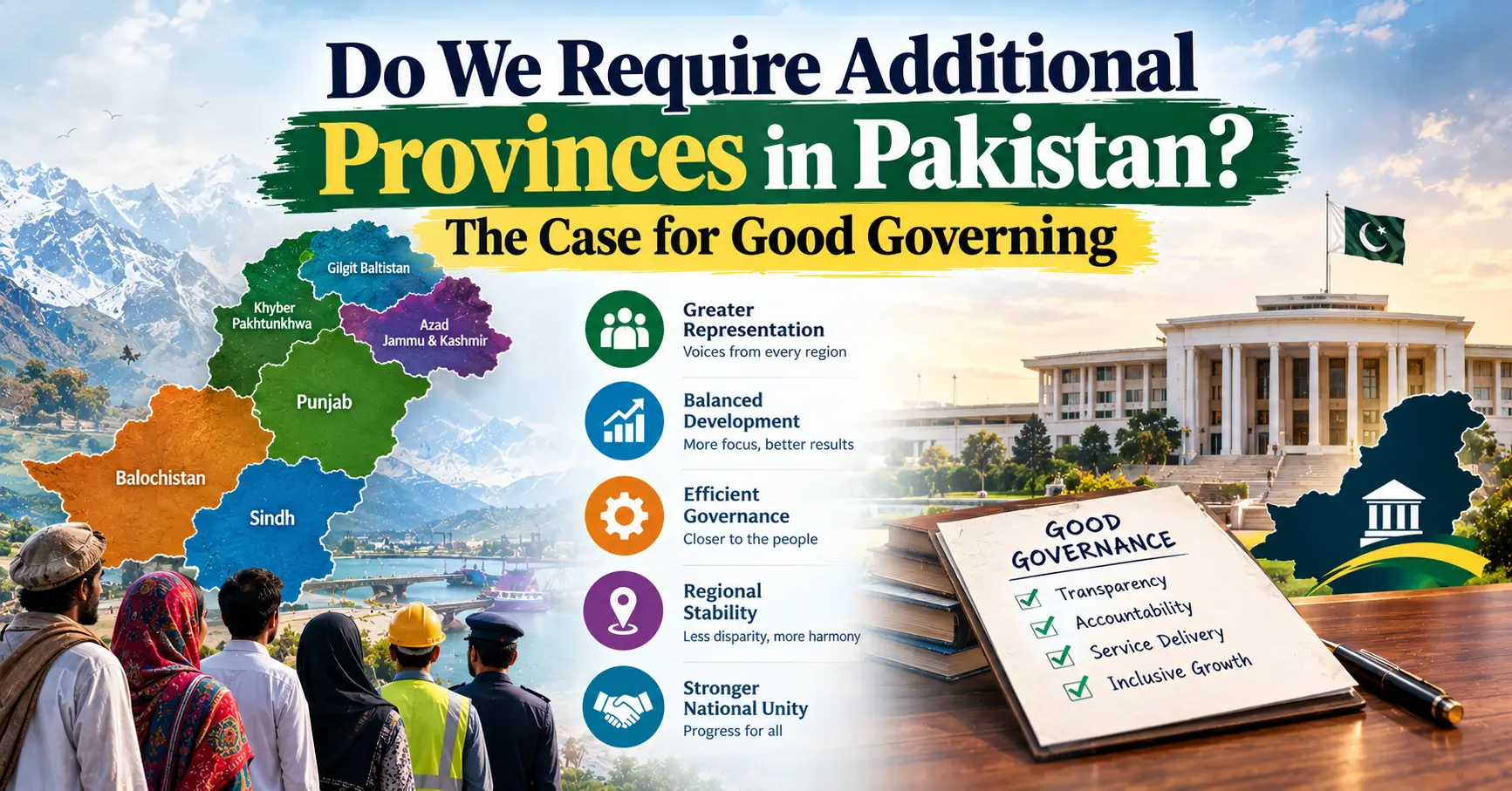
Do We Require Additional Provinces in Pakistan? The Case for Good Governing Pakistan’s debate over creating new provinces increasingly points toward a simple answer: the country may need them. However, any such reform must follow the Constitution, strengthen local governments, respect voters’ choices, and maintain transparency. Moreover, political leaders must place public welfare above personal and institutional interests.
Why New Provinces Matter
Since independence, Pakistan has introduced constitutional amendments, decentralization initiatives, police reforms, civil service changes, and development programs. Nevertheless, many of these efforts have failed to break the traditional command-and-control approach.
Furthermore, the 18th Amendment transferred important powers to the provinces, yet many citizens still struggle to access quality education, health care, justice, and employment. Therefore, new provinces could bring decision-making closer to communities if leaders genuinely strengthen democratic institutions and encourage public participation.
At the same time, creating provinces involves much more than redrawing boundaries. The real objective should involve improving governance, representation, accountability, and access to essential services.
Moving Beyond the Colonial Governance Model
Colonial administration largely treated local populations as subjects to govern rather than citizens who could actively shape government. Consequently, some state institutions continue to reflect that mindset. Meanwhile, political dynasties often resist structural changes that could reduce their influence.
What Criteria Should Guide New Provinces?
Before drawing new provincial boundaries, the government should consider geographical continuity, financial viability, administrative practicality, development potential, language, and culture. Therefore, no single factor should determine the structure.
For example, policymakers could use geographical names such as Central Punjab, Northern Punjab, and Southern Punjab. Alternatively, they could consider regional and linguistic identities such as Punjab, Potohar , and Saraiki. However, citizens should have a meaningful role in deciding both boundaries and names. Do We Require Additional Provinces in Pakistan? The Case for Good Governing
Why Public Participation Matters
Public opinion should remain central to the process. Authorities alone should not make these decisions. Instead, citizens need opportunities to express their preferences through transparent consultations.
Important Features
-
Constitutional backing for new provinces
-
Stronger local governments
-
Meaningful public consultation
-
Transparent boundary decisions
-
Financial and administrative viability
-
Better access to essential services
-
Greater political representation
-
Stronger local democracy
The Road Toward Better Governance
Ultimately, new provinces cannot solve Pakistan’s governance challenges by themselves. Instead, their success will depend on whether they bring decision-making closer to citizens and improve democratic participation. Therefore, provincial restructuring should move beyond political slogans and territorial disputes. Do We Require Additional Provinces in Pakistan? The Case for Good Governing
Creating new provinces should mean more than establishing new territories or administrative centers. Above all, Pakistan needs governance models that reflect citizens’ wishes, represent diverse communities, and give people meaningful authority. Only then can new provinces contribute to democratic decolonization and stronger governance across Pakistani society.
Topic starter
Posted : September 9, 2026 12:39 pm