
Notifications
Clear all

Indian Cinema in the Modi Era: Nationalism and Political Storytelling
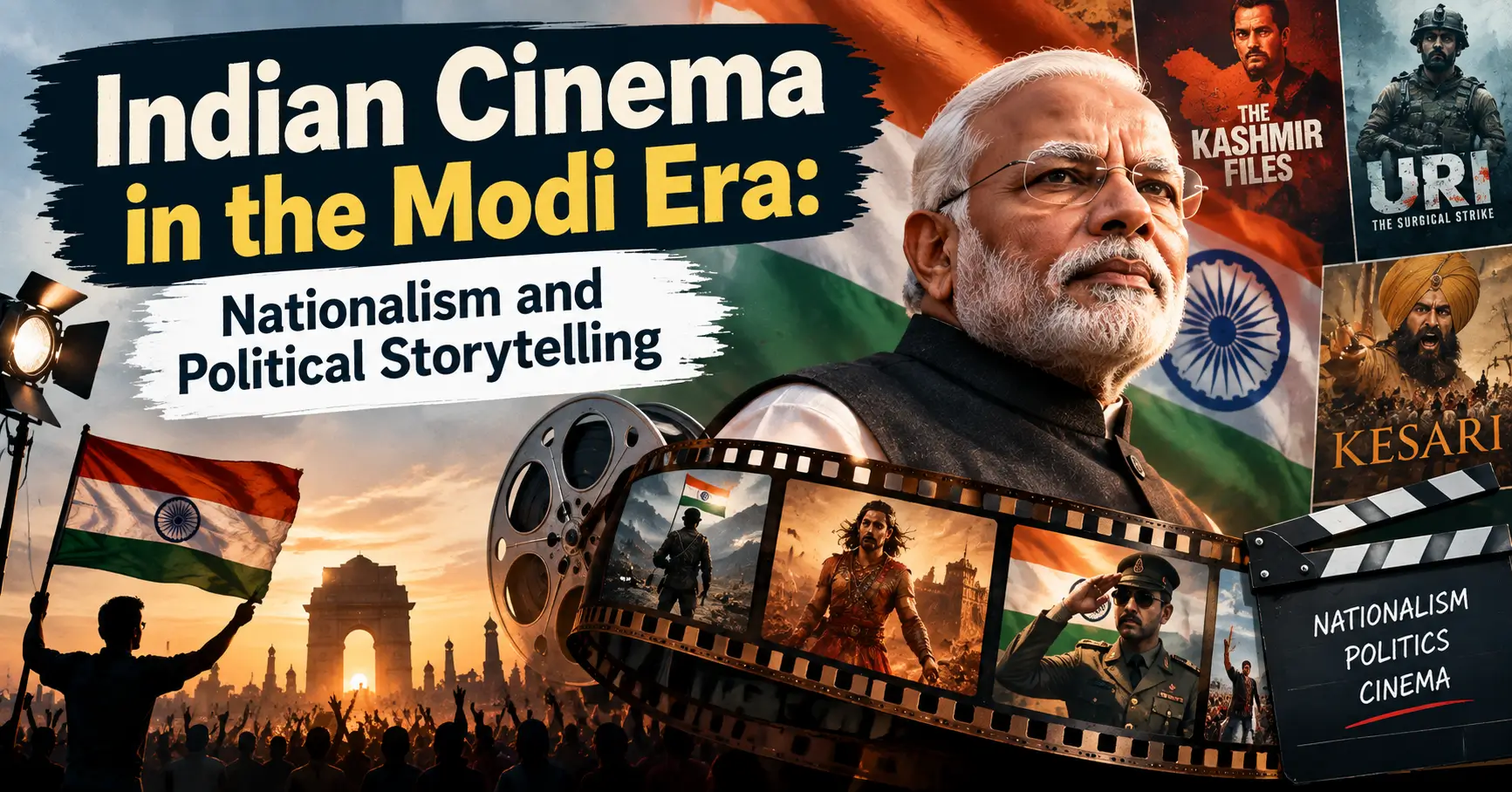
Indian Cinema and Nationalist Narratives
Indian Cinema in the Modi Era For decades, Indian cinema has entertained audiences at home and abroad while shaping cultural identity and projecting India’s image internationally. Its traditional strength came from diverse genres, creative ideas and stories that connected with people across social and cultural boundaries. In recent years, however, mainstream films and OTT platforms have increasingly focused on nationalism, national security, terrorism, military operations and patriotic sacrifice.
The Rise of Political Storytelling
Films such as Uri: The Surgical Strike, The Kashmir Files, Fighter, Ranneeti: Balakot & Beyond and Dhurandhar place national security and conflict at the heart of their narratives. Some productions portray Pakistan or Muslims mainly through the lens of security threats and hostility. Such portrayals can influence public perceptions by presenting complicated political disputes as straightforward struggles between national heroes and external enemies.
Uri: The Surgical Strike, released shortly before India’s 2019 general election, presented military action as a demonstration of national strength. The Kashmir Files focused on the suffering of Kashmiri Pandits, while Fighter highlighted military missions, courage and sacrifice. These narratives often give greater weight to the state’s viewpoint and provide limited space for alternative interpretations. Indian Cinema in the Modi Era
OTT Platforms and Security Themes
The rapid expansion of streaming services has transformed India’s entertainment industry. Affordable mobile internet and wider connectivity have allowed millions of viewers to access digital content. However, several popular productions, including Bard of Blood, Special Ops, Avrodh, State of Siege and IC 814: The Kandahar Hijack, centre their stories on terrorism, espionage, intelligence operations and national security. Indian Cinema in the Modi Era
Impact on Public Perception
Cinema does more than provide entertainment. Directors use characters, dialogue, cinematography and emotional storytelling to shape audience responses. When films repeatedly associate violence with a particular country or community, they can reinforce existing stereotypes and reduce interest in alternative perspectives.
Important Features of the Topic
-
Explores nationalism in contemporary Indian cinema
-
Examines political themes in Bollywood
-
Discusses the growing influence of OTT platforms
-
Highlights portrayals of Pakistan and Muslims
-
Connects entertainment with public perception
-
Examines cinema as a form of soft power
-
Supports balanced and critical storytelling
-
Discusses artistic freedom and political influence
The Need for Balanced Storytelling
National security and historical grievances deserve serious attention, but filmmakers can explore these subjects without reducing complex conflicts to simple ideological battles. Stories that present different experiences and viewpoints can encourage audiences to question assumptions and understand regional conflicts more deeply.
As Indian cinema and OTT platforms reach larger international audiences, their influence on perceptions of South Asia will continue to grow. Cinema achieves its greatest value when it encourages discussion, presents complexity and gives multiple voices an opportunity to speak. Maintaining artistic independence alongside historical responsibility can help entertainment contribute to informed public debate rather than simply reinforce political conclusions.
This topic was modified 51 minutes ago by zarnishayat
Topic starter
Posted : September 10, 2026 12:55 pm