
Notifications
Clear all

“Pakistan’s Water Crisis Is a Crisis of Accountability”
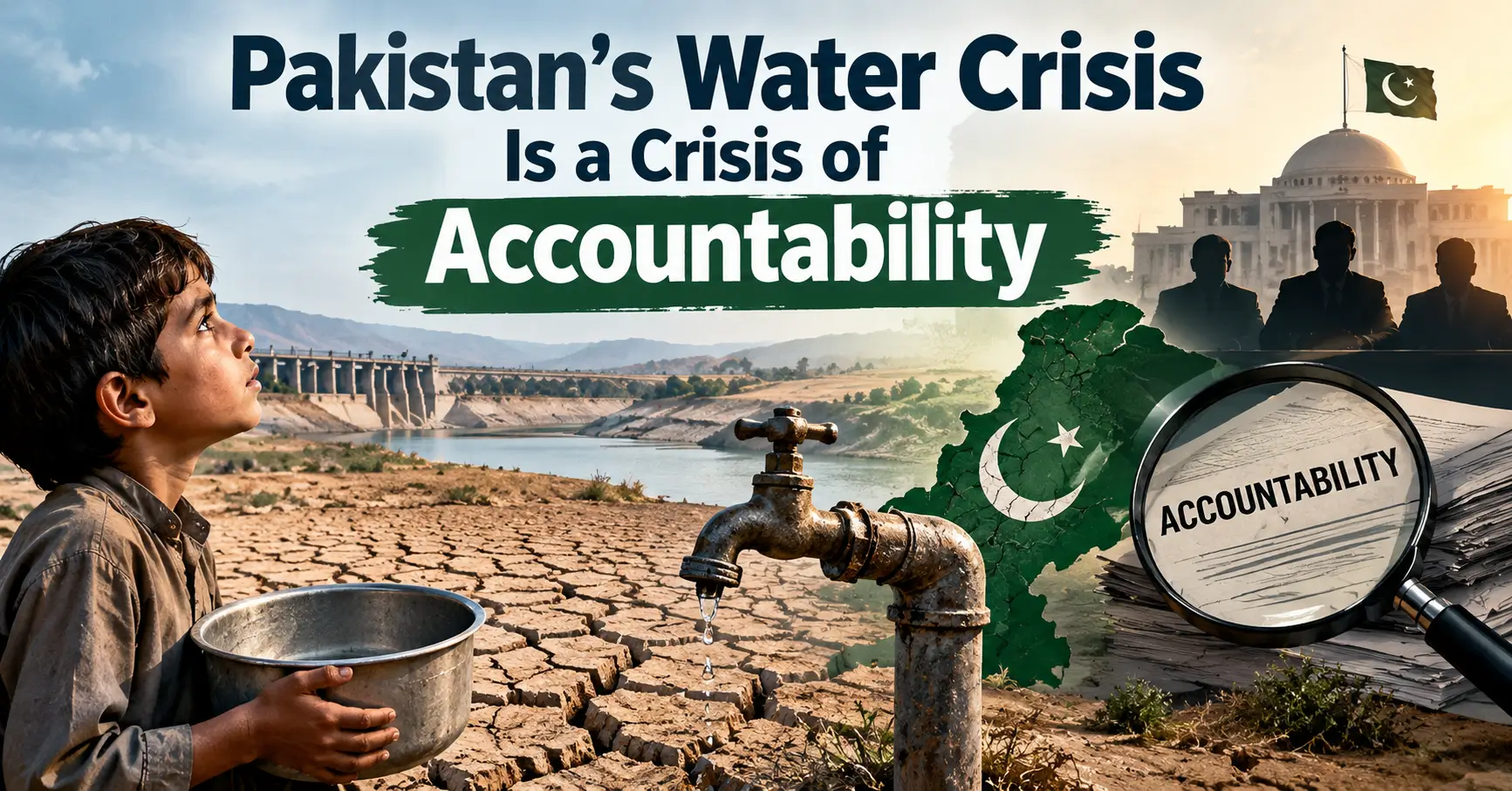
Water Management and Accountability in Pakistan
Pakistan’s water crisis involves more than limited water resources. Weak coordination, inadequate monitoring, and unclear accountability create serious challenges at different levels of governance. Water travels from Himalayan glaciers to reservoirs, barrages, canals, aquifers, farms, and cities. Different institutions manage each stage, but poor coordination can create conflict, waste, and long-term environmental damage.
Understanding Pakistan’s Water Institutions
The Indus River System Authority (IRSA) implements the 1991 Water Apportionment Accord and coordinates water distribution among provinces. WAPDA manages major reservoirs, while provincial irrigation departments oversee water distribution. Local authorities and utilities provide water to households and communities.
Effective water governance requires these institutions to share reliable information and coordinate their decisions. Transparent measurement, accurate data, and strong technical expertise can help policymakers understand how much water enters the system, where it goes, and how much remains available.
Managing Groundwater Resources
Groundwater plays a major role in Pakistan’s agriculture and domestic water supply. The rapid expansion of tubewells has increased access to groundwater, while solar-powered pumping has reduced energy costs for farmers. However, uncontrolled extraction can place severe pressure on aquifers.
Pakistan needs effective groundwater licensing, regular monitoring, aquifer-specific management plans, and practical enforcement mechanisms. Policymakers must also consider how agricultural subsidies, energy incentives, crop choices, exports, and infrastructure projects influence national water demand. “Pakistan’s Water Crisis Is a Crisis
Important Features
- Explains Pakistan’s water governance structure
- Discusses the role of IRSA and the 1991 Water Apportionment Accord
- Highlights the importance of transparent water accounting
- Examines groundwater depletion and tubewell expansion
- Explores federal-provincial coordination
- Emphasizes reliable monitoring and technical expertise
- Identifies gaps between water laws and their implementation
- Presents practical measures for stronger accountability
- Connects agricultural policies with water consumption
- Supports regular parliamentary and provincial oversight
Building a Water-Accountable System
Pakistan does not necessarily need another administrative institution. Instead, existing bodies need clearly defined responsibilities, measurable targets, transparent reporting, and independent auditing. Accountability should extend from interprovincial water distribution to irrigation channels, farms, utilities, and households. “Pakistan’s Water Crisis Is a Crisis
A strong water governance system must track where water comes from, where it goes, and who should respond when problems emerge. Better coordination, reliable information, effective regulation, and continuous oversight can strengthen Pakistan’s water security and protect its resources for future generations.
Topic starter
Posted : September 10, 2026 12:37 pm