
Notifications
Clear all

“Rethinking Pakistan’s National Development Policy”
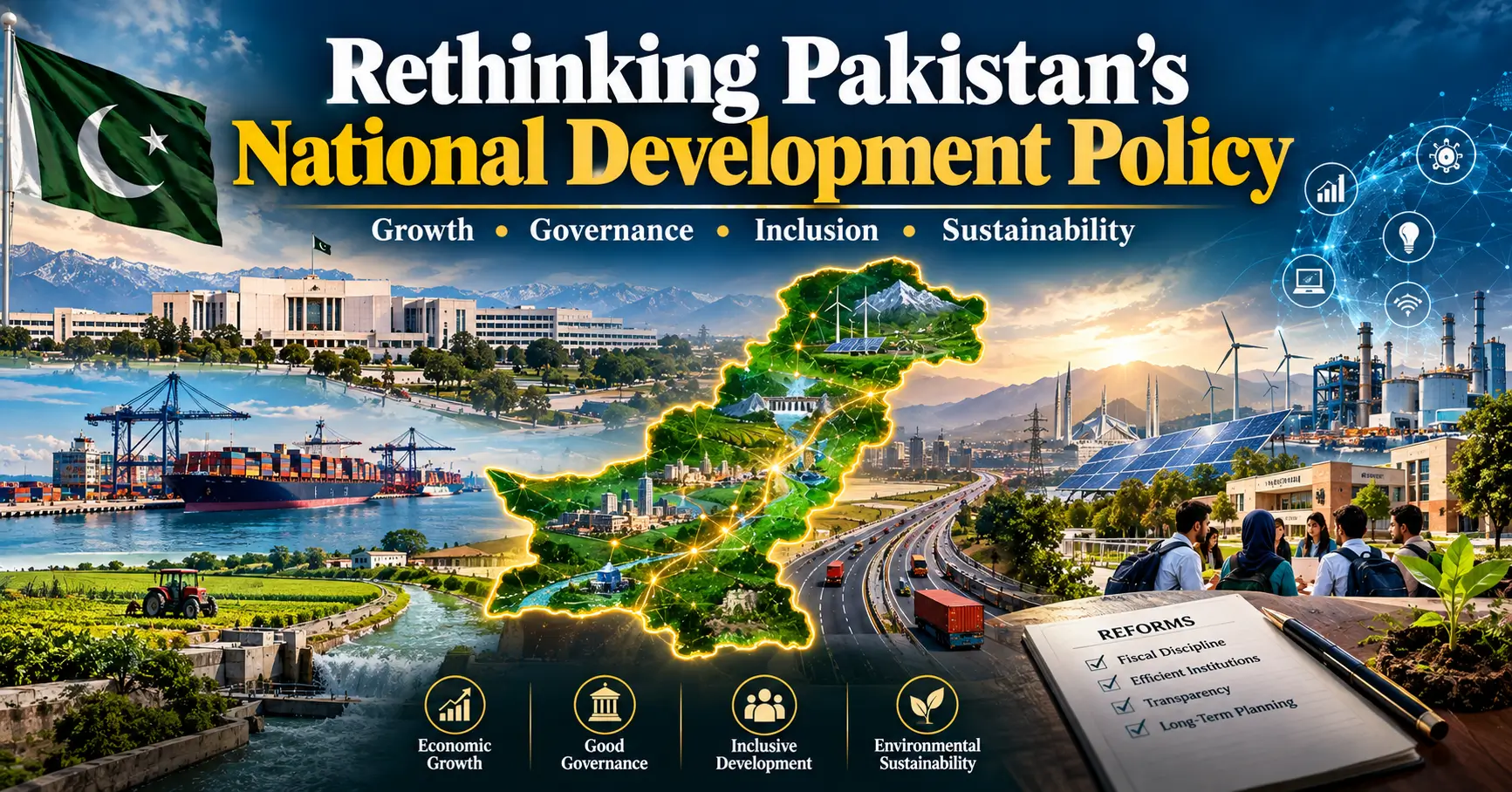
Rethinking Pakistan’s National Development Policy
Pakistan needs a development policy that puts citizens, economic independence, and national sovereignty at the centre of decision-making. Rethinking Pakistan’s National Development Policy examines how Pakistan can build a development strategy based on the needs, values, and priorities of its people rather than relying heavily on external agendas.
A People-Centred Development Strategy
A successful state must first understand why it exists. Its primary responsibility should remain the welfare of its citizens. Education, healthcare, food security, skills development, employment, and economic opportunities should therefore form the foundation of national planning.
Policy makers should listen to ordinary citizens and understand their practical concerns. Foreign donors and narrowly focused experts should not dictate national priorities. Pakistan needs institutions and leaders who can connect development policies with the everyday realities of its population.
Economic Independence and Sovereignty
Economic strength directly supports national sovereignty. Pakistan needs stronger exports, competitive industries, and wider access to international markets. Instead of depending mainly on traditional exports, the country should develop innovative and value-added products that can compete globally.
Trade with countries across the Global South can create new opportunities. Pakistan can also explore national currencies and currency-swap arrangements to reduce excessive dependence on foreign currencies and external financial institutions.
Fair Competition and Economic Growth
Pakistan also needs a transparent business environment. Genuine competition can encourage companies to improve productivity, reduce costs, and develop internationally competitive products.
The state should discourage cronyism, preferential treatment, and unjustified subsidies. Businesses should succeed because of efficiency, innovation, and quality rather than political connections. Where public resources support private projects, the state should ensure that citizens receive a fair share of the resulting benefits.
Strategic Opportunities for Pakistan
Pakistan can use its geographic position to strengthen its economic role. Its proximity to China offers opportunities to develop industrial and goods-processing hubs, particularly in coastal regions. Better infrastructure and efficient policies can help Pakistan connect regional production with international markets.
Key Lessons for National Development
- Prioritise citizens’ welfare and national needs.
- Strengthen exports and economic competitiveness.
- Expand trade with Global South markets.
- Promote innovation and productive industries.
- Reduce cronyism and political favouritism.
- Encourage transparent and fair business competition.
- Develop coastal goods-processing hubs.
- Use alternative trade and currency arrangements.
- Link officials’ performance with measurable results.
- Protect national sovereignty and economic independence.
Conclusion
Pakistan needs a development policy that reflects its own priorities while responding intelligently to global changes. A citizen-focused approach, competitive economy, stronger exports, regional trade, and strategic use of geography can help Pakistan pursue sustainable development without compromising sovereignty or national dignity.
Topic starter
Posted : September 14, 2026 12:30 pm