
Notifications
Clear all

Will the US Flag Fly Again in Kabul? Dure Akram
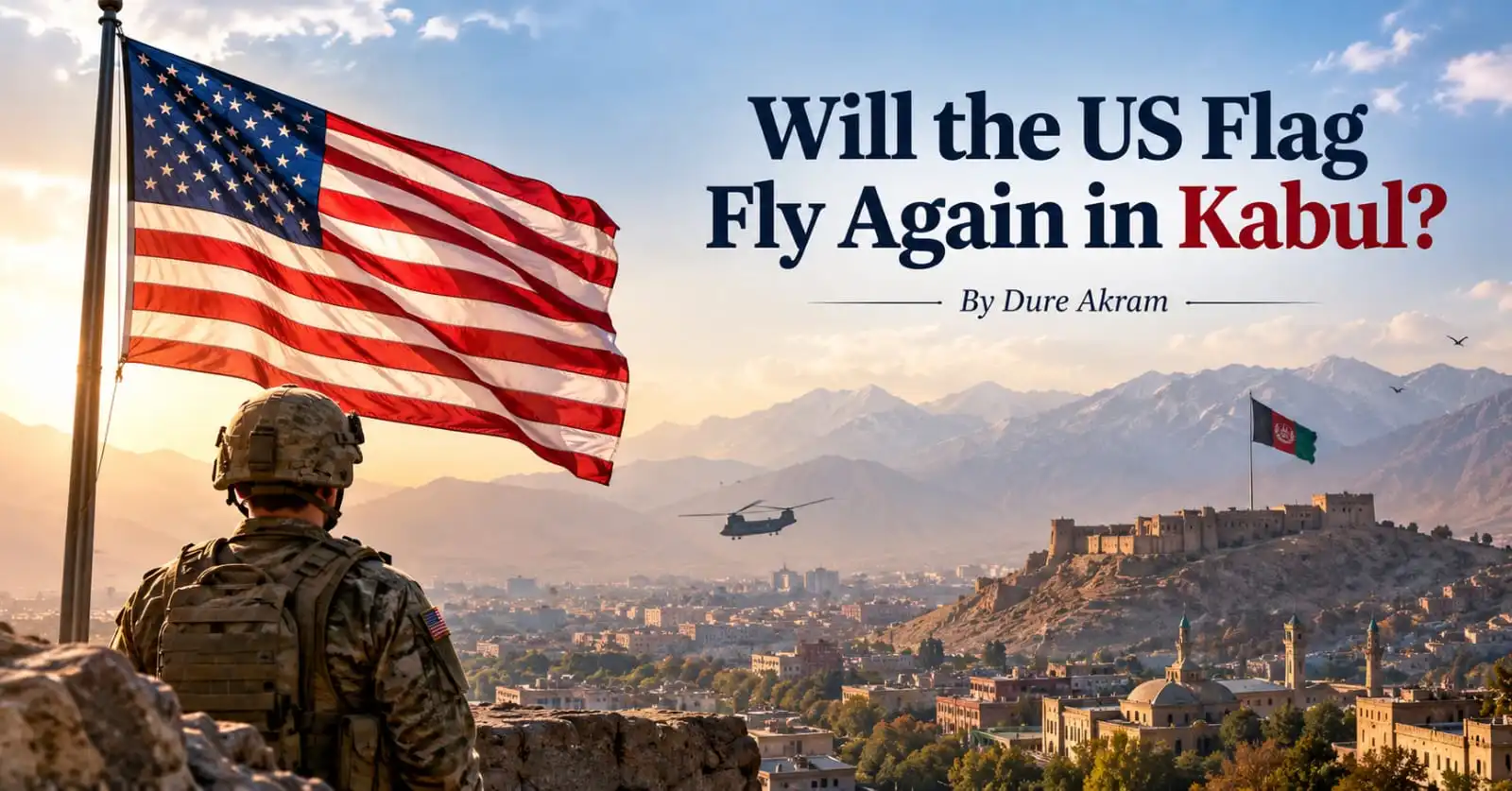
Will the US Flag Fly Again in Kabul? Dure Akram Five years after the last American troops left Afghanistan, the Taliban are asking Washington to come back–not with soldiers, but with diplomats and money. On August 14, Foreign Minister Amir Khan Muttaqi told The New York Times that the United States could reopen its embassy and invest in mines, dams and roads. “We consider the chapter of war to have come to an end,” he said.
Two weeks later, he sharpened the pitch to the Financial Times, welcoming US investment in mining and infrastructure and putting Afghanistan’s estimated $1 trillion mineral wealth on the table.
Washington, however, is sending almost the opposite signal. The embassy has been closed since August 31, 2021; the Afghanistan Affairs Unit remains in Doha; Afghanistan is still under a Level 4 “Do Not Travel” advisory; and on the fifth anniversary of Abbey Gate, President Donald Trump again described the withdrawal as a disaster and accused the Taliban of freeing thousands of prisoners from Bagram. Hardly the language of an administration preparing an easy return!News Subscription Service
Security threats, regional competition and geography have repeatedly pulled Afghanistan back onto the US agenda.
Former US Ambassador Ronald E Neumann did not dismiss the possibility. “Yes, I can imagine that,” he noted in an interview, but his operative phrase was “real actions for real actions.” An embassy should not be exchanged for promises, and the Taliban would first have to make measurable changes, particularly on women and girls. “If you do things like opening an embassy without getting anything in return,” Neumann warned, Kabul would conclude that it could simply “stay put” until Washington changed its position. Will the US Flag Fly Again in Kabul? Dure Akram
The Taliban, meanwhile, have learned how to obtain many benefits of recognition without it. Russia formally recognised their government in July 2025. China has accepted a Taliban-appointed ambassador without recognition. India upgraded its Kabul mission to an embassy in October 2025. The European Union still withholds recognition, yet maintains a representation in Kabul and, in June, held its first Brussels talks with a Taliban delegation. Just last week, another Taliban delegation arrived in Germany to work on deportation arrangements.
Former Pakistani diplomat Najm us Saqib captured this in a recent opinion article, “Ghost Government”, as he noted how de facto control is outweighing de jure legitimacy. Ambassador M Alam Brohi made the same realist case when I asked him about Neumann’s remarks. “Obviously the US cannot write off Afghanistan forever,” he said. How long can Washington keep its distance from a country bordering Iran, China and Central Asia while Russia, China, India and Europe build working relationships with Kabul?History
Still, engagement does not amount to an embassy. Former US diplomat Jon Danilowicz sharply rejected suggestions that reopening is near. “I see no prospect that the US will be reopening the embassy in the near future,” he told me, describing some reporting as “mainly clickbait.”
The central obstacle remains what Washington would receive in return. Afghanistan is the only country where girls and women are formally barred from secondary and higher education. UNESCO now estimates 2.4 million girls have been excluded from secondary education by 2026. The March release of American Dennis Coyle also failed to persuade Washington to lift its designation of Afghanistan as a state sponsor of wrongful detention. An embassy opened now would give Kabul a major symbolic victory while leaving Washington struggling to name the concession it secured. Will the US Flag Fly Again in Kabul? Dure Akram
Then there is terrorism, simultaneously the strongest argument for contact and against normalisation. A UN monitoring report this year said no member state accepted the Taliban claim that there were no terrorist groups in Afghanistan: Al-Qaeda continued to enjoy Taliban patronage, while TTP remained one of the largest terrorist groups operating there. A US inspector-general report likewise said Taliban sanctuary for TTP and uneven enforcement contributed to persistent cross-border violence.
All this has become extraordinarily important for Islamabad, which continues to make a case on the global stage regarding the TTP sanctuaries based in Afghanistan driving attacks inside Pakistan. The dispute has already produced Pakistani airstrikes and cross-border retaliation. Pakistani-American analyst Faiz Rehman told me renewed American engagement could help if it imposed enforceable counterterrorism conditions. But on an imminent breakthrough, his answer was blunt: “Not really, not soon.”Regional News Updates
There is also an under-discussed American problem. Washington conducts Afghanistan diplomacy from Doha and much of its over-the-horizon counterterrorism from outside the country. A US oversight report published this year said American forces conduct counterterrorism operations principally from bases in Qatar. The arrangement leaves the United States with less direct visibility than rivals with diplomats on the ground.
Veteran US diplomat Robin Raphel argues that a Kabul presence could improve access to minerals, deepen Central Asian ties and counter China and Russia. “But that requires hands-on engagement through a U.S. presence in Kabul.”
Michael Kugelman of the Atlantic Council similarly notes that minerals are precisely the kind of commercial pitch likely to interest White House. Yet Washington spent nearly $1 billion trying to develop Afghan mining between 2004 and 2021 with little tangible progress.
Meanwhile, US President Trump has repeatedly said he wants the air base back and last year warned that “bad things” could happen if Afghanistan refused. The Taliban continue to rule out any renewed foreign military presence. Kabul is therefore offering minerals and an embassy while Washington wants concrete security concessions and the Taliban seek legitimacy, sanctions relief and frozen assets. Will the US Flag Fly Again in Kabul? Dure Akram
There is now another voice in Washington that makes the debate harder to dismiss. Aisha Wahab, recently elected as the first Afghan American member of Congress, argues for diplomacy regardless of who governs Afghanistan and says engagement should be used to press on women’s rights and civil rights. Her point for advocates of isolation is simple: five years without an embassy have not reopened girls’ schools.
There is some historical precedent for caution. Washington closed its embassy in Kabul in January 1989 as the Soviet withdrawal neared completion, and did not reopen it until January 2002. History does not mean another return is inevitable. It does show, nonetheless, that American disengagement from Afghanistan has rarely settled the Afghan question for Washington. Security threats, regional competition and geography have repeatedly pulled the country back onto the US agenda. Will the US Flag Fly Again in Kabul? Dure Akram
That may eventually make some form of presence in Kabul useful again. But there is a considerable distance between talking to the Taliban and recognising their government. A liaison office, expanded technical contacts or a limited diplomatic presence could give Washington greater access without handing Kabul the legitimacy it has been seeking. For now, an American embassy remains unlikely. But five years after the withdrawal, the debate has shifted subtly from whether Washington should deal with the Taliban at all to how, where, and on what terms it should do so. The door is not open. It is no longer quite as firmly shut, either.
SOURCE: https://dailytimes.com.pk/1546767/will-the-us-flag-fly-again-in-kabul/
Topic starter
Posted : September 3, 2026 8:35 am