
Notifications
Clear all

Governance, Economic Policy and Reform in Pakistan
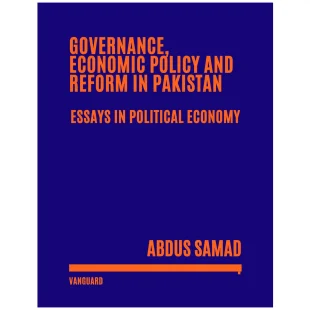
Governance, Economic Policy and Reform in Pakistan by Abdus Samad examines the relationship between governance, economic management, and institutional reform in Pakistan. The book provides a useful framework for understanding how government institutions influence economic performance, development, and public welfare. Moreover, it explores the challenges that affect policy implementation and administrative effectiveness.
Understanding Governance in Pakistan
Governance involves the processes through which public institutions make decisions, manage resources, and deliver services. Furthermore, effective governance requires accountability, transparency, institutional capacity, and responsible leadership. However, weaknesses within institutions can create difficulties for policy implementation and economic development.
Therefore, the study of governance helps students understand why well-designed policies do not always produce the expected results. In addition, the book connects administrative performance with broader economic and social outcomes. Consequently, it offers an important perspective on the institutional dimensions of Pakistan's development.
Economic Policy and Development
Economic policy plays a central role in shaping investment, employment, public expenditure, taxation, trade, and economic growth. Similarly, policymakers must consider both short-term economic pressures and long-term development objectives. Nevertheless, economic reforms often face institutional, political, and social constraints.
For example, fiscal management requires governments to balance public spending with available resources. Likewise, economic planning requires coordination between different institutions and stakeholders. Meanwhile, effective implementation can strengthen public confidence and improve the delivery of essential services. As a result, governance and economic policy remain closely connected.
Important Features
-
Focus on governance in Pakistan
-
Discussion of economic policy and management
-
Examination of institutional reform
-
Analysis of administrative challenges
-
Emphasis on public-sector performance
-
Focus on accountability and transparency
-
Discussion of economic development
-
Understanding of policy implementation
-
Examination of institutional capacity
-
Useful perspective on Pakistan's reform process
Institutional Reform in Pakistan
Institutional reform seeks to improve the effectiveness, efficiency, and accountability of public organizations. Additionally, reforms can address weaknesses in administrative structures, decision-making processes, and public-sector management. However, successful reform requires sustained institutional commitment rather than isolated changes.
Moreover, reform programs need clear objectives, effective coordination, and appropriate implementation mechanisms. Thus, governance reforms can contribute to better economic policymaking and stronger institutions. At the same time, policymakers must recognize the country's changing economic and social conditions.
Academic Importance
This book can support students studying public administration, economics, governance, political science, and development studies. First, it helps readers understand the connection between institutions and economic outcomes. Second, it provides a framework for examining policy and reform issues. Furthermore, students can use its themes to develop a broader understanding of Pakistan's administrative and economic challenges.
Ultimately, Governance, Economic Policy and Reform in Pakistan highlights the importance of capable institutions, effective policies, and meaningful reform. Overall, it offers a valuable academic perspective for readers seeking to understand governance and economic policymaking in Pakistan.
Topic starter
Posted : September 19, 2026 10:53 am