
Notifications
Clear all

Twenty Years Crisis 1919 to 1939: An Introduction to the
Study of International Relations By E H Carr
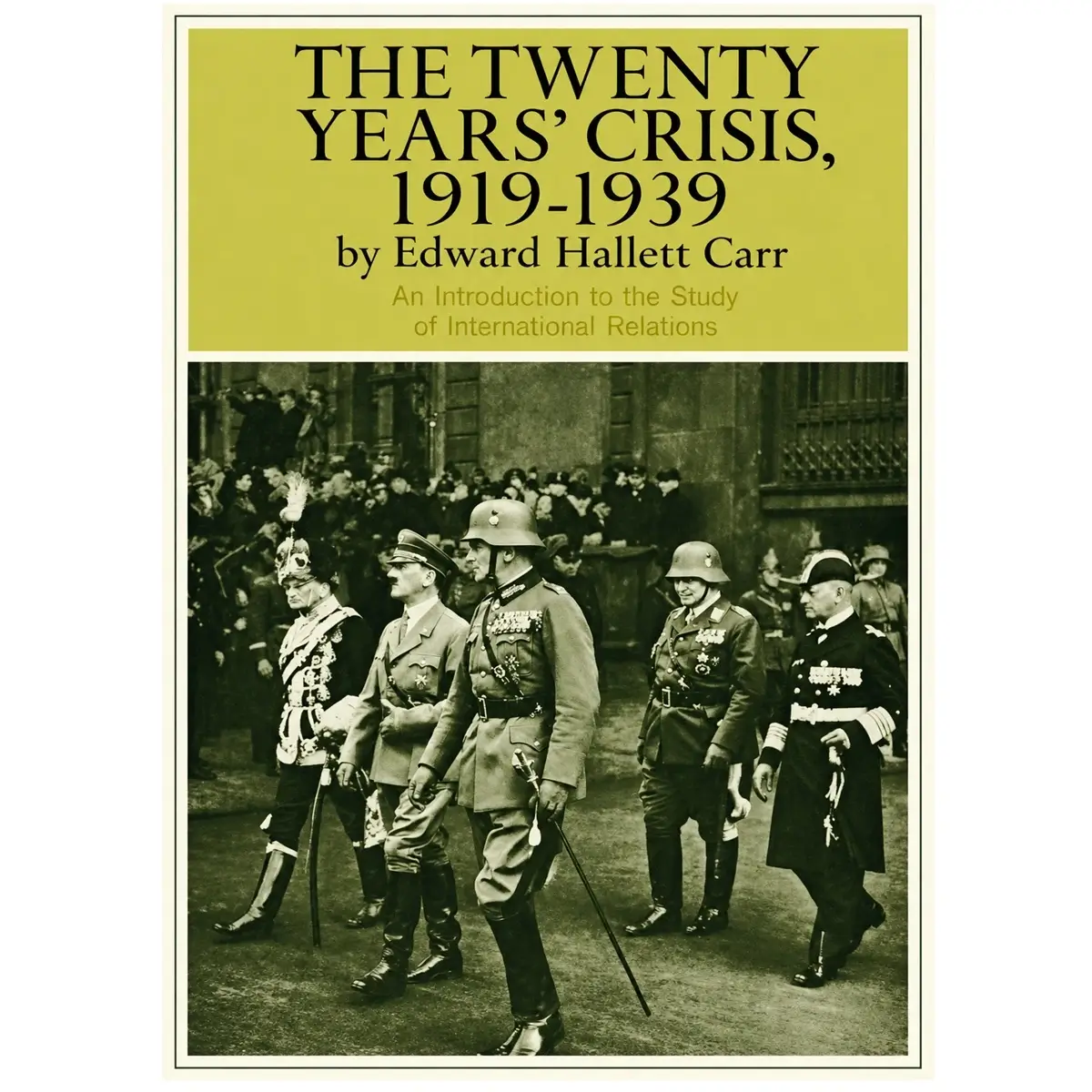
Twenty Years Crisis 1919 to 1939 by E. H. Carr
Twenty Years Crisis 1919 to 1939 by E. H. Carr remains one of the most influential works in the study of international relations. First published in 1939, the book examines the turbulent period between the First and Second World Wars. Moreover, Carr challenges idealistic approaches to international politics and explains why power, national interest, and political realities shape relations among states.
Understanding the Crisis of the Interwar Period
Carr explores the political order that emerged after the First World War. Initially, many leaders believed that international institutions, collective security, and diplomacy could prevent another major conflict. However, Carr argues that these expectations ignored the realities of power politics.
Consequently, the international system struggled to maintain peace. Furthermore, dissatisfied powers challenged the post-war settlement. Meanwhile, economic instability and competing national interests weakened international cooperation. Therefore, Carr considers both political ideals and material power essential for understanding international affairs.
Realism and Utopianism in International Relations
One of the central themes of Twenty Years Crisis 1919 to 1939 concerns the conflict between realism and utopianism. Firstly, Carr criticizes thinkers who place excessive confidence in morality and international institutions. Secondly, he argues that states usually pursue interests according to their political and economic power.
Nevertheless, Carr does not completely reject morality. Instead, he seeks a balance between ideals and practical realities. Thus, his approach helped shape classical realism as a major theory of international relations.
Important Features of the Book
The book offers several valuable features for students and researchers:
- Detailed analysis of international politics between 1919 and 1939
- Critical examination of realism and utopianism
- Discussion of power, morality, law, and national interest
- Analysis of the weaknesses of the League of Nations
- Explanation of political and economic power
- Strong foundation for understanding classical realism
- Valuable arguments for International Relations students
- Historical insight into the causes of global instability
Why the Twenty Years Crisis 1919 to 1939 Still Matters
In addition, Carr explains how powerful states often influence international rules. Similarly, he shows why political institutions cannot function effectively without considering existing power structures. For example, agreements may fail when they ignore the interests of major states.
Moreover, modern international politics still reflects many of these problems. Indeed, competition among major powers, security concerns, economic interests, and institutional limitations remain significant.
Although international relations have changed considerably, Carr's fundamental questions remain relevant. Likewise, his analysis encourages readers to examine political claims critically. Hence, students gain both historical knowledge and theoretical understanding.
Ultimately, Twenty Years Crisis 1919 to 1939 provides an essential introduction to realist thinking. At the same time, it warns against relying exclusively on either power or idealism. Accordingly, Carr argues for a political order that recognizes reality while pursuing meaningful reform. Finally, the book remains essential reading for students of International Relations, Political Science, history, and competitive examinations.
Topic starter
Posted : September 1, 2026 3:09 pm