
Notifications
Clear all

Hindu Muslim Confrontation 712 to 1947 by Dr. Sarfraz Ahmed Mirza
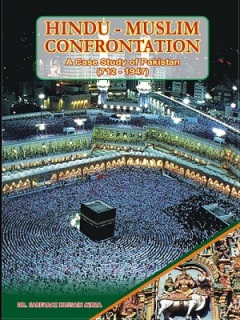
Hindu Muslim Confrontation 712 to 1947 By Dr Sarfraz Ahmed Mirza The history of Hindu-Muslim relations in the Indian subcontinent stretches across more than twelve centuries. In Hindu Muslim Confrontation 712 to 1947, Dr. Sarfraz Ahmed Mirza examines this long historical period, beginning with the arrival of Muhammad bin Qasim in Sindh in 712 and ending with the creation of Pakistan in 1947. The subject covers political change, religious differences, cultural interaction, and the development of competing political interests.
Early Muslim Rule and Changing Political Power
The arrival of Muhammad bin Qasim marked an important turning point in the history of the subcontinent. Over time, Muslim dynasties expanded their political influence across different regions. However, Hindu and Muslim communities did not simply remain in constant conflict. Instead, periods of political rivalry existed alongside trade, cultural exchange, social interaction, and cooperation.
Furthermore, the Delhi Sultanate and later the Mughal Empire created new political and administrative structures. Although rulers followed different policies toward religious communities, their governments often included people from diverse backgrounds. Consequently, the relationship between Hindus and Muslims developed through both cooperation and competition.
British Rule and the Growth of Political Differences
The situation changed considerably under British rule. The decline of Muslim political power, the rise of British authority, and the emergence of modern education influenced political thinking among both communities. Meanwhile, new political organizations began to represent different interests.
The formation of the Indian National Congress and later the All-India Muslim League added another dimension to Hindu-Muslim politics. Moreover, debates over political representation, separate electorates, constitutional reforms, and provincial power increased mistrust. As a result, communal tensions became increasingly connected with modern political competition.
From Political Conflict to Partition
By the twentieth century, disagreements over constitutional arrangements had become more serious. The Muslim League increasingly argued that Muslims formed a distinct political community whose interests required constitutional safeguards. Meanwhile, Congress generally promoted a broader Indian nationalism. Hindu Muslim Confrontation 712 to 1947 By Dr Sarfraz Ahmed Mirza
Eventually, the Pakistan Movement gained greater support, particularly after the Lahore Resolution of 1940. However, negotiations failed to produce a political arrangement acceptable to all major parties. Therefore, rising communal violence, political deadlock, and British withdrawal ultimately contributed to Partition in 1947.
Key Features
-
Covers the period from 712 to 1947.
-
Examines Hindu-Muslim political relations.
-
Discusses Muslim dynasties and Mughal rule.
-
Explores the impact of British colonialism.
-
Highlights the growth of modern political identities.
-
Examines the role of Congress and the Muslim League.
-
Discusses the Pakistan Movement and Lahore Resolution.
-
Explains major developments leading to Partition.
Ultimately, the book presents a broad historical period in which political competition, religious identity, cultural interaction, and colonial policies shaped relations between Hindus and Muslims. Therefore, understanding this history requires attention to both confrontation and cooperation rather than viewing the entire period through a single lens.
https://hostnezt.com/cssfiles/pakistanaffairs/Pakistan-Manifest-Destiny.pd f" target="_blank" rel="noopener">DOWNLOAD NOW
This topic was modified 4 days ago by manzoor1
Topic starter
Posted : September 12, 2026 7:17 am