
Notifications
Clear all

Saudi Arabia-Houthi Conflict: A Dangerous New Escalation
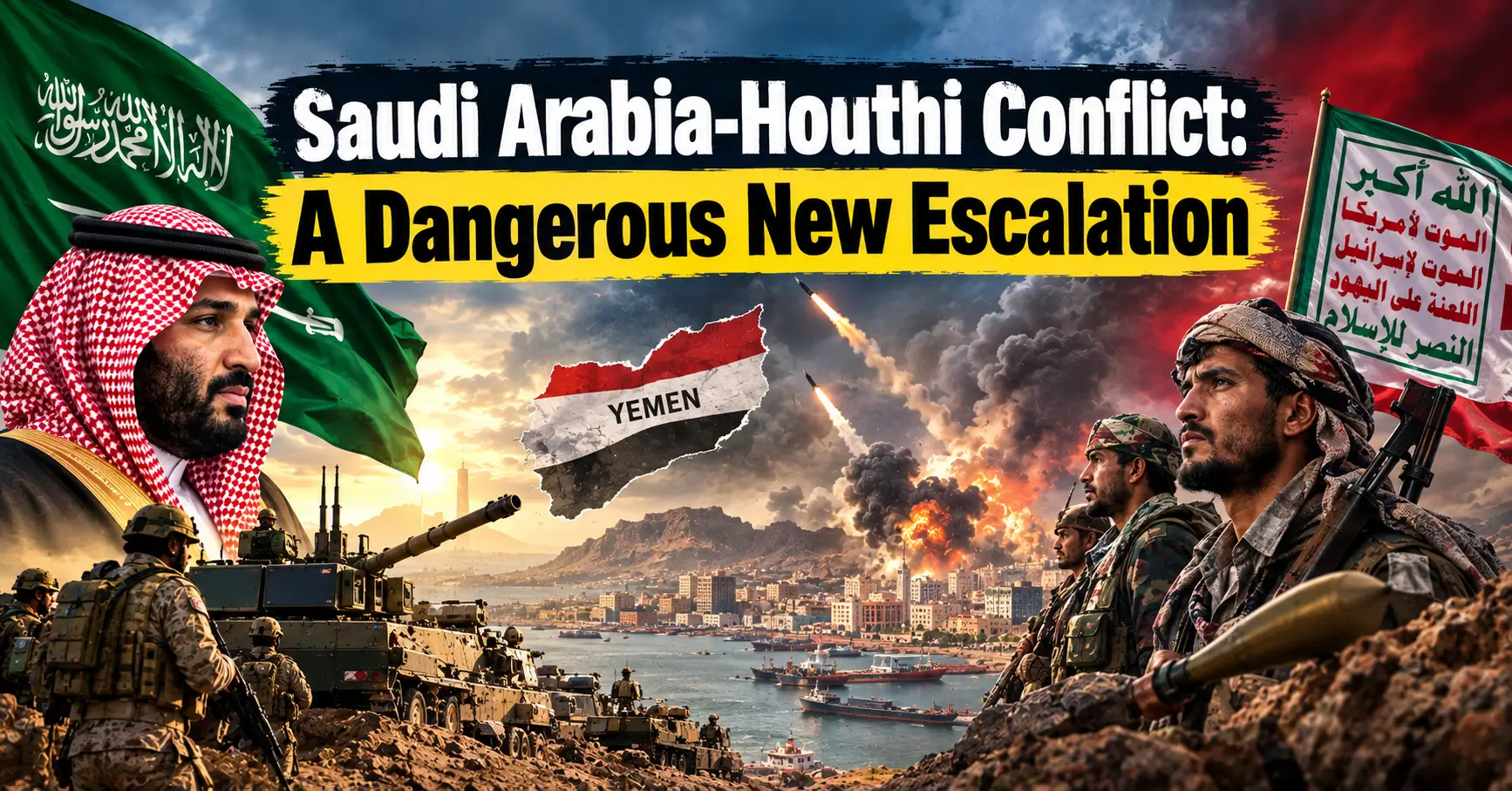
Escalation by danger
Saudi Arabia and Houthi militia conflict About the Saudi Arabia's Joint Defence Agreement
There is a very serious problem between the two.
Only several weeks of establishment of the Makkah Joint Defence Agreement has come its first major examination bythe escalation of the Saudi Arabia and Yemen’s Houthi militiamen’s confrontation intension. The rebels have targeted the Saudi airports by sending both their missilesand drones and at the same time targeted the oil facilities, while the Saudi forces intensified their air strikes on the areas under Houthi control. The Houthi forces are also targeting the Saudi tankers in the Red Sea.
The current wave of violence began mid July when the Yemeni government forces attacked a flight from Iran at Sana’a airport. This prompted the Houthis to impose a naval blockade of Saudi Arabia and start targeting Saudi-flagged cargo ships. The
group has been engaging in warfare with the Yemeni government that has been acknowledged internationally since 2014. After the two sides came to an agreement and a ceasefire was internationally mediated in 2022, the fighting decreased. However, the tensions came back when the Houthi broke the truce, declared the blockade of Saudi shipping in the Red Sea, and then attacked Saudi ships. The declaration is part of their plan that Saudi Arabia will be removed from Yemen, and Houthi will fullycontrol the country.
This newly developed situation is causing the Western Asian conflict to expand in size. At present USA continues its war with Iran without reaching a definite outcome. As Saudi Arabia is now itself under direct threats, a main question is – will Riyadh invoke the alliance's mutual defence provision where an assailment of one member is determined as an attack upon everyone? There could be repercussions of such an event which will be beyond the countries involved. Having already occupied major areas of Yemen, the Houthis captured a key island in quick offensive against government forces, which granted them access and full control of the Bab al-Mandeb strait, a key chokepoint of maritime trade through which 12% of global trade flows. At this time the Houthi control about 90% of the Red Sea seashore of Yemen. Leaders of the Houthi keep insisting that their purpose is to stop all commercial ships from the Red Sea but rather specifically Saudi-connected vessels.
Nonetheless, due to the increased tension the vessels apart from Saudi ones might also avoid passing through this channel which may be their intention. Already the Strait of Hormuz is almost entirely closed. Such a situation is very risky. It has been expected globally energy prices that have already been disturbed by the 6-month war between the United States and Israel against Iran to undergo further
interruptions.
Saudi Arabia that has remained quite uninvolved in the Iranian conflict is now at risk of getting pulled into a war on a much larger
scale.
The US and Israel have, over time, carried out missile attacks on the Houthis mainly because the group is supportive of Palestinian resistance. But a question arises here: would US involvement in the Saudi-Houthi conflict actually create more stability or perhaps make things worse for a crisis that Washington itself has contributed a lot to? The growing hostility between Iran and Saudi Arabia could, on the flip side, help US strategic interests.
Saudi Arabia, up to this point, has not publicly declared that the Makka defense alliance clause has been triggered; this would bind Pakistan and Turkey to help the Saudi kingdom in the event of an attack. However, given the escalating tension, they are likely to have had discussions behind doors. The talks of diplomatic efforts to cool Houthi escalation at this point of time continue. The latest news suggests that the Pakistan military head and the Saudi foreign minister, Prince Faisal bin Farhan, both met the Iranian foreign minister, Abbas Araghchi. Meanwhile, Pakistan has relayed to Iran Saudi Arabia's formal request for the country to limit Houthi activities, reminding Tehran about Pakistan’s defensive responsibilities to Saudi Arabia.
Defence Minister Khawaja Asif recently commented that
, should there be an unprovoked missile strike on Saudi Arabia, or the conflict’s spill over within the kingdom, that situation is bound to make the alliance a reality, as well as he said there should be no doubt about it”. Back in April, Saudi’s Defense ministry had a word for
the arrival of the first Pakistani military delegation composed of combat and support aircraft to the King Abdulaziz Air Base under a defence agreement signed
in September 2025. On the other hand, however, after Khawkia Asif's remarks, the Foreign Office spokesperson was of the view;
"I guess there isn’t anything to lose by keeping it secret here."
This situation poses potential danger to Pakistan and the broader regional area. As the conflict deepens, it could also involve the countries which until now were keeping their distance from the war with Iran and focusing on diplomacy to secure peace. Hence, Pakistan needs to move very cautiously in the case of a conflict between the two sides since this could be very harmful to the country. The current situation has become extremely dangerous and it calls for a political settlement without a new war.
This topic was modified 58 minutes ago by zarnishayat
This topic was modified 57 minutes ago by zarnishayat
This topic was modified 33 minutes ago by zarnishayat
Topic starter
Posted : September 16, 2026 10:16 am