
Notifications
Clear all

Pakistan’s New Geopolitical Ambition
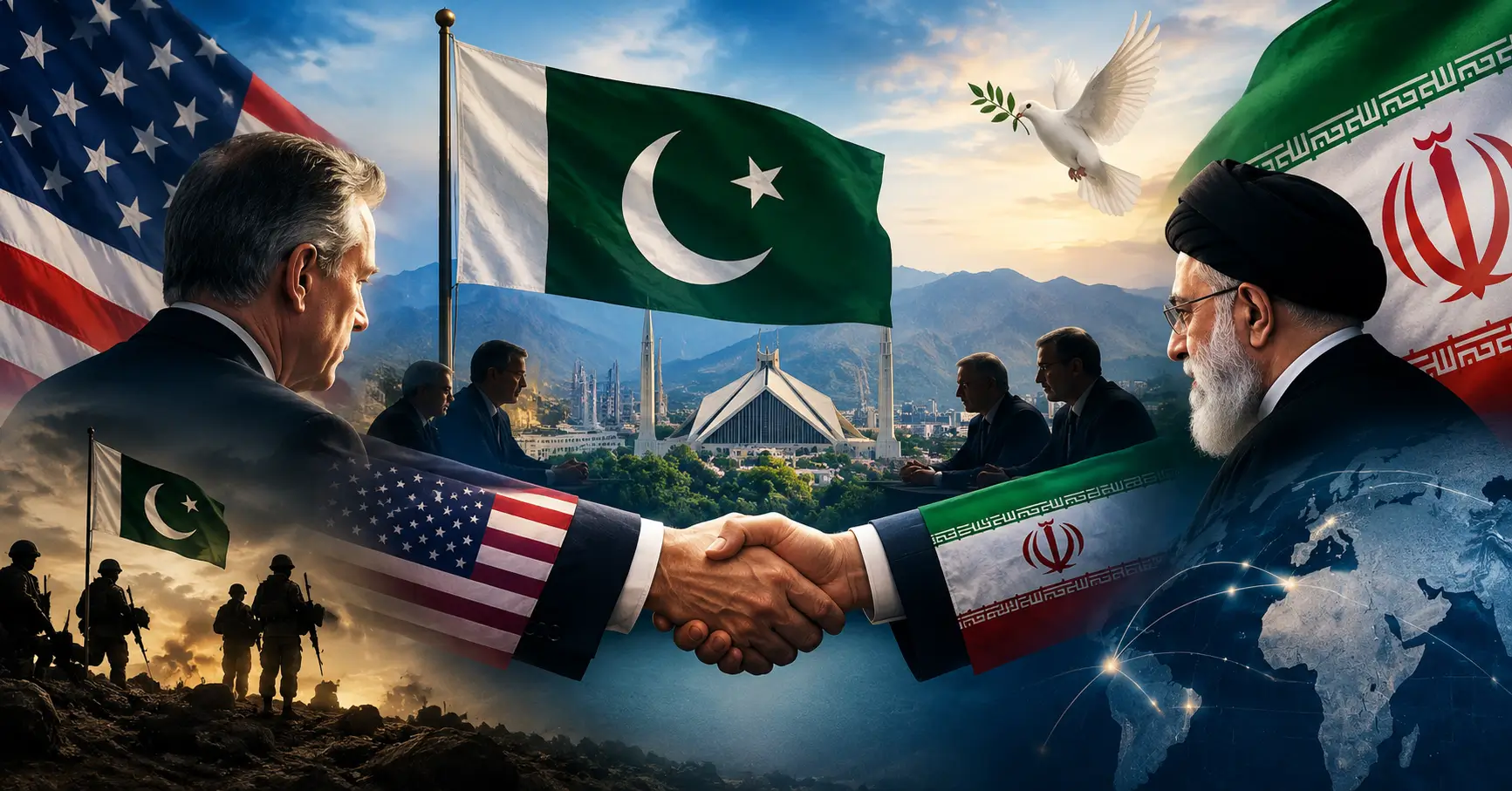
Pakistan’s New Geopolitical Ambition Across the Muslim societies, especially through the Western and Southern parts of Asia, their collective memories have been built on the understanding that with the disbursement of Ottomans, only a collective reaction will be capable of facing different challenges from politics down to defense.
Making an exception, Crown Prince Mohammed bin Salman of Saudi Arabia is considered to have set a benchmark by the setting up of the Islamic Military Counter Terrorism Interfaith in 2015 which partly resulted in the Makkah Joint Defence Agreement recently. Besides, the idea is by and large a familiar one in Pakistan. Pakistan has been pushing towards such ideas of an overarching alliance of Muslim nations for a considerable time. This particular aspiration goes back very far, and Baghdad Pact was a major step in this evolution of thoughts.
Nonetheless, for a country like Pakistan, the idea has played a great role not only in shaping national ideology, but also in the domestic political and organizational aspects of the State.
Ever since Trump proposed the Gaza peace plan, Pakistan has been steadily increasing its presence in the Gulf regions. Then came the Islamabad MoU and the Makkah Agreement in turn. This has made Pakistan feel much more confident in itself as a country, though, when its leaders turn their attention back on the country’s political and economic difficulties, they may feel a bit disheartened and their confidence is somewhat reduced by having these successes in foreign affairs amidst very domestic and very economic situations.
Becoming quite perturbed by the discrepancy between national achievements and national difficulties, the power elite, who are primarily worried about domestic issues, want an immediate solution yet at the same time do not wish to give up on Pakistan’s international momentum.
The Pakistan power elite is willing to take major political risks to bring about a high level of internal stability and order that matches Saudi Arabia and Türkiye, the other two regional partners. The change that could be considered a major one would be the new provinces creation, as this act can be politically quite dangerous.
The country is strengthening its relationships in West Asia so as to improve its defense capabilities and have a greater strategic impact.
Here, one will find only one aspect to be discussed, namely, to understand and see what kind of factors have made leaders of the power structure to lose their composure whenever accomplishments externally cannot be matched with the situation on the ground and the economic situation.
In the political economic aspect and the changing geopolitical order, for instance, several other ways of the contradiction are open to be understood. Still a big issue is rarely talked about: how ideology, statecraft and geography interrelate.
Turkey and Pakistan have in common quite similar geographical concerns. Their capabilities and ambitions in military are so far from what their territorial circumstances can easily accommodate. The chance of expansion is also very limited. It leads both countries to the level of anxiety common in middle powers which is about keeping and developing military as well as defense capabilities.
Each country faces the dilemma in its unique way. Turkey creates regional groupings and alliances, in the meanwhile also broadens transnational partnerships with Turkic states. Pakistan, on the other hand, appears to be departing its earlier strategy of ‘strategic depth’, which, among other things, aimed at the geographical constraints relief through the expansion of its influence. Pakistan, therefore, chooses to concentrate and reinforce defense and strategic capabilities mainly in West Asia. India remains the main target of Pakistan, since India's geographical and military dominance is considerably greater than of Pakistan.
Saudi Arabia is another example of a middle power which faces a certain kind of middle power dilemma. Its priorities are mainly to ensure economic stability and to guard itself from local actors that it perceives as ideologically different or potentially dominant, for instance Iran and Israel. Riyadh has made its peace with Israel, but still Israel's potential to hegemonize the area makes Saudi Arabia question a future political order of the region. In addition, Saudi Arabia has hostile border adversaries, primarily Yemen, where Iran has made its influence quite deep.
Along with all this, the power elite is persuaded that Pakistan's political order, mode of ruling the country, and constitution are the root cause why the country will not achieve the required long lasting stability. Afghanistan Taliban which used to be an ally of the establishment in Pakistan, provided a clear example: Islamist allies have their own national identities, objectives and territorial aspirations, and all these might be a threat to the priorities of the establishment of another power elite of a country at a later stage.
Middle powers with a tough vicinity and good-defence capability normally come up with wider strategic visions.
They may want to bring back their historical influence by forming partnerships with like-minded nations and the capabilities and aspirations of such nations correspond to their own. The dominant powers have time and again capitalized on this trend by prodding the middle powers to join them in forming military alliances.
Currently, Washington is assisting the evolving defence structure resulting from the Makkah understanding. However, it seems that China and Iran are content to wait for a decline in the US presence in the region before they present their own plans or even proceed to do the same.
It was during the Cold War that the US and the UK took advantage of this middle-power trend several times. The Baghdad Pact is the one alliance which best illustrates this type.
Initiated around the middle of the 1950s the Baghdad Pact gathered Turkiye, Pakistan, Iraq, Iran and the UK. The pact ended up a disaster as political changes came in Iraq and Iran and at the same time Turkiye went through internal political instability. Pakistan’s New Geopolitical Ambition
During those times, the world took Pakistan for the most reliable member of the regional community. The country's politics was more or less under control and its economy seemed to be doing quite well. Pakistan's ruling class still keeps the memory of that epoch as the golden past and desires to revitalize the nation's position with that of the Muslim world's leading middle powers.
Pakistan’s New Geopolitical Ambition
Topic starter
Posted : September 6, 2026 8:13 am