
Notifications
Clear all

Ramifications of US-Iran Conflict BY Rear Admiral (retd) Faisal Shah
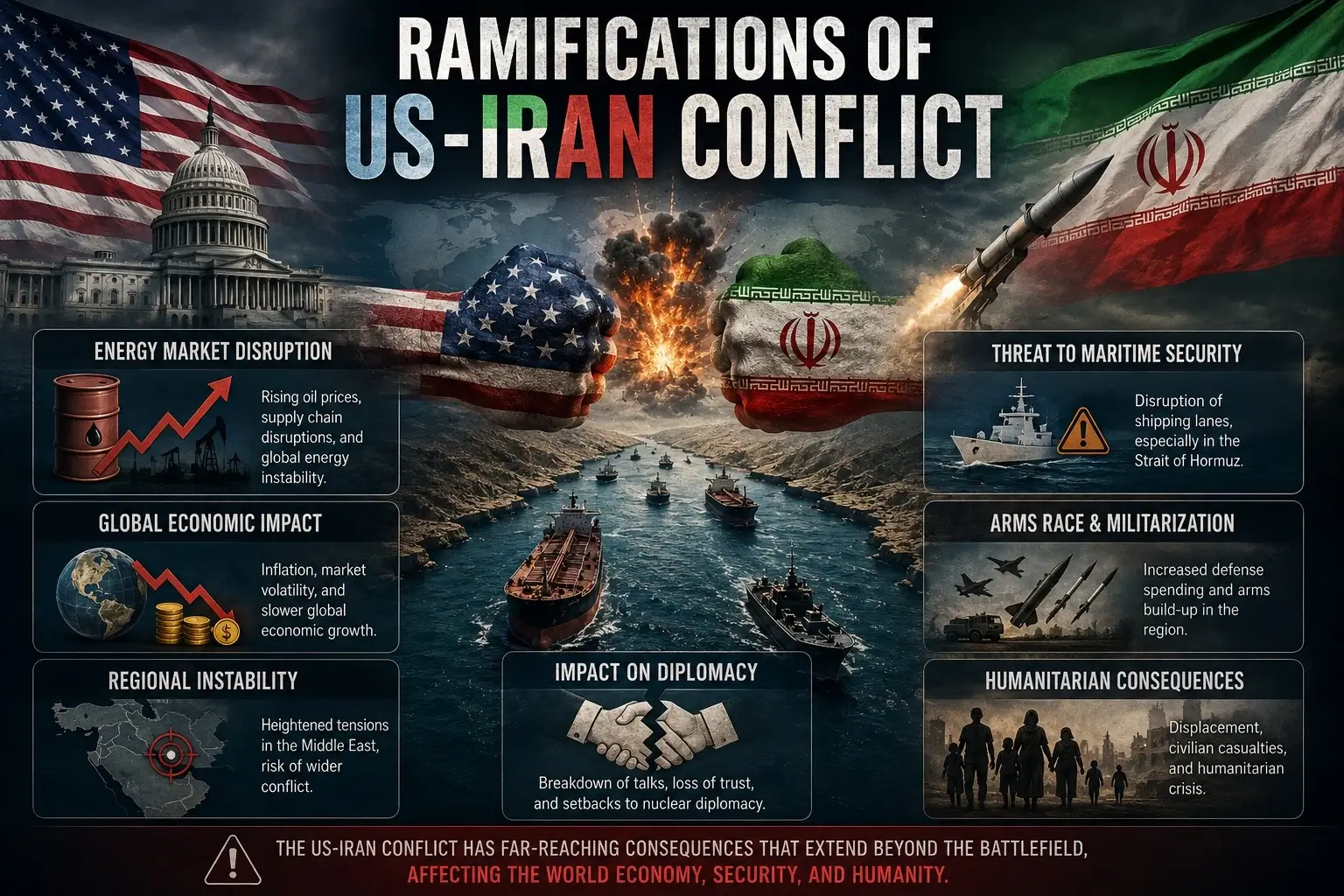
The US dished out its latest National Security Strategy in November 2025, in which it was clearly stipulated that the US would not allow any adversarial power to exercise control over oil and gas resources of the Middle East and the waterways that pass through. The US therefore came to this region for war with a strategic objective of remaining here; timings and modus operandi, however, suited Israel more. The US has assured security to the Gulf partners for years against Iran, and this war has actually dawned on them the insufficiency of US capability and capacity. They are therefore looking towards diversified means. First, KSA entered into SMDA with Pakistan, then Kuwait endorsed its defence agreement with Pakistan, followed by a multinational maritime defence alliance led by KSA and then a tri-lateral defence agreement between KSA, Türkiye and Pakistan. There are speculations that some other countries are also aspiring to be part of this agreement. Iran has been encouraging regional countries to join hands and look after regional matters themselves. Its ideology and ambitions seem to be prevailing. The space for the US to stay put in the region is thus constricting.South Asians & Diaspora
4.8-magnitude earthquake jolts Zhob, Chaman in Balochistan
China and Russia must be happy with what all the US has done in Iran, not because of the devastation but, of course, for the infamy it has brought to its stature as a Super Power. It has not been able to achieve any of its objectives and is now adamant on having an agreement with Iran concluded so that it may disengage at the earliest. During the forty-day war between the US, Israel and Iran, the oil prices did not rise to the level forecasted. It was mainly because China controlled its energy import bill. Apart from savings, it might not have desired the US to hasten its disengagement under mounting international pressure. On the contrary, China has acted maturely during the whole saga and has emerged as a very responsible actor who can be a trusted partner in future. For China, it is also comforting that the US military deployments in the Pacific were thinned out. The news of the depleting stock of missiles with the US must have pleased China further, which may consider aggressive actions against Taiwan, a glimpse of which was witnessed when, in anticipation of Typhoon Dolphin, China issued cautionary messages to the seafarers in the Taiwan Strait, obviously incurring objection from Taiwan. Russia, on the other hand, must be equally pleased with the current US imbroglio, notwithstanding the increased number and magnitude of attacks from Ukraine. President Trump’s decline of President Zelensky’s request for more Patriot missiles must be a matter of solace for President Putin, who knows Europe without the US cannot support Ukraine to the sheer disadvantage of Russia. Both China and Russia may not mind enjoying this historic opportunity the US has offered to them for some more time.
Heavy rain triggers flood alert in Rawalpindi, Islamabad as Nullah Lai rises
On the Arabian Peninsula, KSA has acted patiently, gaining substantial respect among the regional countries. It did not enter the war despite multiple attacks from Iran, until the Houthis engaged it. A clear divide between KSA and the UAE was vivid in spite of the fact that KSA condemned Iranian attacks on the UAE. This political ascendancy enabled KSA to form multiple coalitions and alliances, rallying countries under its banner. The UAE, on the other hand, was seen inclined towards Israel, India and the US, a manifestation of I2U2 formed in the year 2021. It is eyeing a pronounced post-war role or perhaps the realisation of shifting the locus of power on the Arabian Peninsula from KSA to the UAE, being attempted for the past few years. The rest of the Arab states need to survive this episode, and survival doesn’t only mean territorial integrity but geo-economic value, in fact. Israel is the only country wishing the war to continue, hoping for a multitude of benefits; Iran’s military capability is being eroded, the probability of Arab neighbours entering the war directly is increasing, and the embarrassment is being faced by the US, not Israel. Domestically also, it is serving the purpose of Benjamin Netanyahu, who has elections and judicial trials in the offing as soon as the war stops. He obviously doesn’t wish to face both.
President Zardari confers Nishan-e-Imtiaz on NSC Commander Gen Raza
India, like the UAE and Israel, is waiting for war booty in the shape of a pronounced role for I2U2. It is logical for India to curse the preeminence Pakistan has achieved. India, despite all sorts of investment in the Middle East, Europe and the US, has diminished appearance on the geo-political canvas today. If India does not get a conspicuous role in the Middle East after the conflict is over, it will be more like a customer for energy resources only. Politically, it will have to work harder to attain its pre-war position. Also, there is no room left for India to malign Pakistan, as the whole world is praising the latter and acknowledging its role as a lead mediator.South Asians & Diaspora
Western Europe saw hottest June-July on record as extreme weather intensifies: WMO
Pakistan has achieved much. In spite of the fact that it isn’t a party to the conflict, it has direct stakes in it. Being a neighbour to Iran, having dependence on seaborne trade, sealing a defence agreement with KSA, enjoying closeness with the US, etc., made it mandatory for Pakistan to offer services for conflict resolution. It should now visualise a situation where it may present a case to the international community for resolving perennial issues like cross-border terrorism, abeyance of the Indus Water Treaty and the pending Kashmir dispute, expecting them to reciprocate Pakistan’s services for saving the world from a bigger catastrophe.
SOURCE: https://www.nation.com.pk/11-Aug-2026/ramifications-us-iran-conflict
This topic was modified 1 hour ago by manzoor1
Topic starter
Posted : August 12, 2026 8:43 am