
Notifications
Clear all

Foreign Policy Analysis: A Comparative Introduction By Marijke Breuning
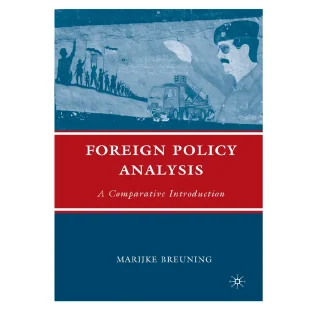
Foreign Policy Analysis: A Comparative Introduction
Foreign Policy Analysis: A Comparative Introduction by Marijke Breuning offers a clear and accessible introduction to the study of foreign policy and international decision-making. The book helps students understand why states make particular foreign policy choices and how leaders, institutions, societies, and international pressures shape those decisions.
Breuning presents Foreign Policy Analysis (FPA) as a field that connects international relations with political science, psychology, sociology, and other disciplines. Rather than treating states as single, uniform actors, the book examines the people and institutions involved in making foreign policy.
Understanding Foreign Policy Decision-Making
Individuals and Leaders
The book gives significant attention to individuals who influence foreign policy. Leaders interpret information, assess threats, consider opportunities, and make choices according to their perceptions and beliefs. This approach helps readers understand why different leaders may respond differently to similar international situations.
States and Institutions
Foreign policy decisions also depend on domestic institutions and political structures. Breuning explains how governments, bureaucracies, political groups, and public opinion can influence international choices. These factors provide a broader framework for understanding state behaviour.
A Comparative Approach to Foreign Policy
Breuning uses comparative analysis to show how foreign policy varies across countries and political systems. This approach encourages readers to examine similarities and differences rather than relying on one explanation for every international event.
The book also introduces important concepts and analytical approaches that help students evaluate foreign policy decisions systematically. Its accessible presentation makes complex theories easier to understand and apply.
Important Features of the Book
- Clear introduction to Foreign Policy Analysis
- Comparative approach to foreign policy decision-making
- Focus on leaders and individual decision-makers
- Discussion of domestic institutions and political factors
- Examination of international influences on foreign policy
- Links between Foreign Policy Analysis and International Relations
- Introduction to major analytical concepts and approaches
- Useful examples for understanding foreign policy behaviour
- Accessible language for undergraduate and graduate students
- Helpful resource for CSS, PMS, Political Science, and International Relations students
Why This Book Matters
Foreign Policy Analysis: A Comparative Introduction provides students with a practical framework for examining how and why governments make decisions beyond their borders. It moves beyond simple explanations of state behaviour and highlights the interaction between individuals, institutions, domestic politics, and the international environment.
For students of Political Science, International Relations, Foreign Policy, and competitive examinations such as CSS and PMS, this book can strengthen conceptual understanding and analytical skills. It also provides a useful foundation for studying contemporary international affairs through a foreign policy perspective.
This topic was modified 5 hours ago by zarnishayat
Topic starter
Posted : September 15, 2026 7:35 am