
Notifications
Clear all

Sindh’s Healthcare Crisis: Thousands of Vacancies, Thousands Left Unemployed
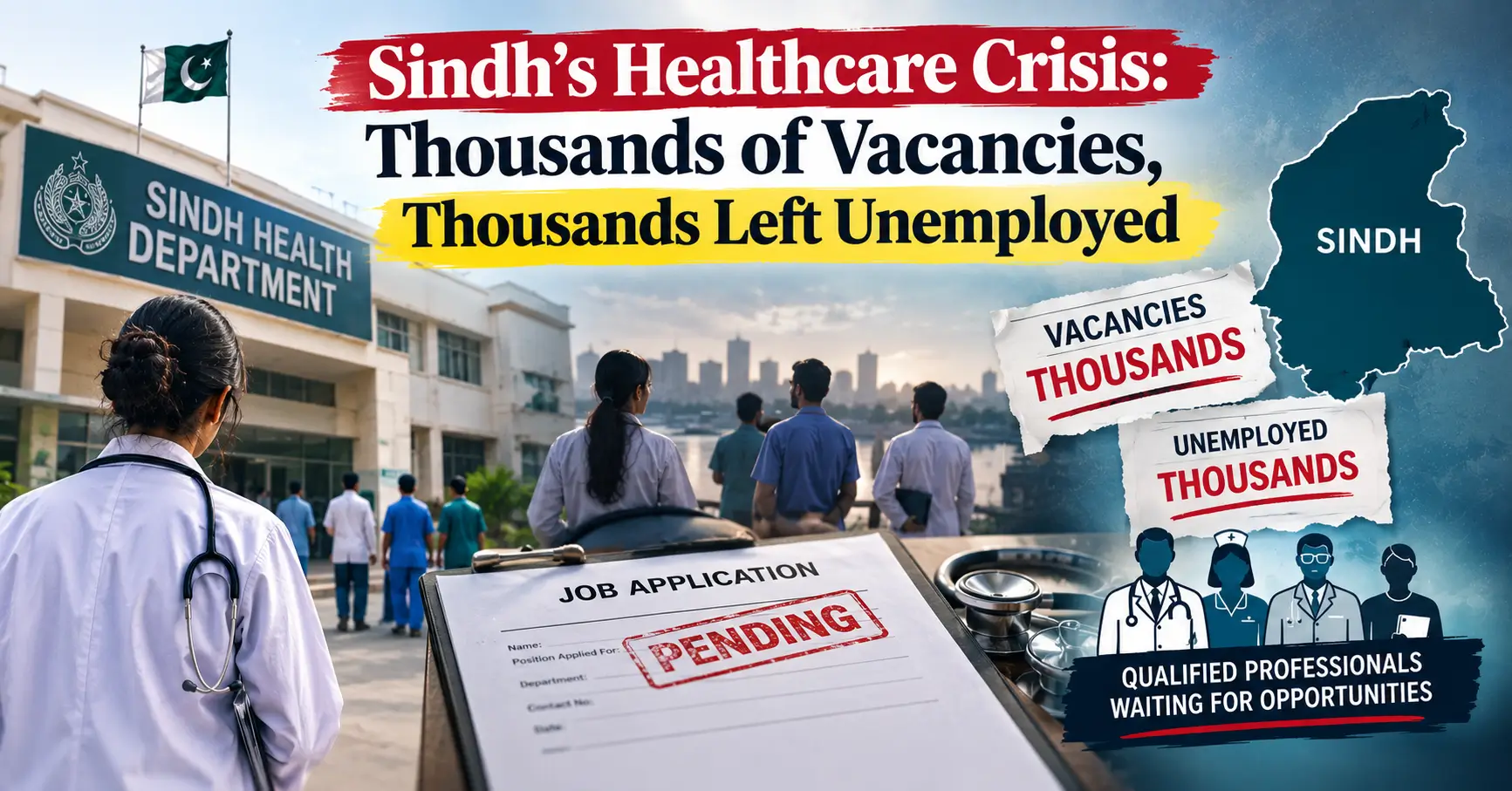
Sindh’s Healthcare Crisis: Thousands of Vacancies, Thousands Left Unemployed One of the most bizarre and preventable problems in Sindh’s healthcare system comes from the administrative structure itself. Government hospitals across the province have more than 8,000 vacant positions, while thousands of trained laboratory technicians, imaging specialists, and paramedical workers continue to wait for employment. Consequently, hospitals face serious staff shortages even though qualified professionals already exist.
A Crisis of Vacancies and Qualified Workers
For nearly fifteen years, some major public hospitals have avoided permanent recruitment of technical and paramedical staff. Meanwhile, new graduates continue to complete professional training without finding suitable employment. As a result, many skilled workers eventually change professions or seek opportunities abroad.
The Sindh Medical Faculty has played an important role in developing this workforce. It has conducted 56 technician courses and trained more than 69,000 students in laboratory technology, operation theatre technology, dialysis technology, and related fields. Therefore, the province already possesses a substantial pool of trained professionals who could strengthen public healthcare. Sindh’s Healthcare Crisis: Thousands of Vacancies, Thousands Left Unemployed
Administrative Barriers
Despite this available workforce, administrative barriers continue to prevent effective recruitment. Moreover, concerns about legal procedures, political influence, and recruitment policies often discourage authorities from making permanent appointments. Thus, the problem does not simply involve a shortage of qualified workers; rather, it reflects a failure to connect trained professionals with vacant positions.
Temporary Hiring Is Not Enough
The provincial government has recently recognized the staffing shortage and allowed hospitals to use third-party agencies for hiring technicians and other healthcare workers. Although this measure can provide immediate relief, it does not solve the underlying problem. Furthermore, temporary workers often lack permanent career opportunities and long-term institutional attachment. Consequently, hospitals may struggle to maintain continuity and consistency in healthcare services. Sindh’s Healthcare Crisis: Thousands of Vacancies, Thousands Left Unemployed
Building a Transparent Recruitment System
Merit-Based Employment
The government can use Sindh Medical Faculty credentials to create a transparent and merit-based recruitment mechanism. In addition, authorities can link verified qualifications with vacant positions and establish clear eligibility criteria. Such a system would reduce opportunities for political pressure and personal favoritism.
Important Features of the Proposed Solution
-
Fill more than 8,000 vacant healthcare positions
-
Utilize the existing pool of trained professionals
-
Verify qualifications through recognized credentials
-
Introduce transparent recruitment procedures
-
Promote merit-based appointments
-
Reduce political interference
-
Provide permanent career opportunities
-
Strengthen public hospital staffing
-
Improve continuity of healthcare services
-
Address legal and administrative barriers
The Way Forward
Ultimately, Sindh does not lack trained healthcare workers; it lacks an effective mechanism for employing them. Therefore, policymakers must remove administrative obstacles, create functional recruitment channels, and provide qualified professionals with fair opportunities. Otherwise, hospitals will continue to suffer from staff shortages while trained graduates remain unemployed. Clearly, this avoidable contradiction carries a heavy cost for Sindh’s healthcare system. Sindh’s Healthcare Crisis: Thousands of Vacancies, Thousands Left Unemployed
One of the most bizarre and preventable problems in Sindh’s healthcare system comes from the administrative structure itself. Government hospitals across the province have more than 8,000 vacant positions, while thousands of trained laboratory technicians, imaging specialists, and paramedical workers continue to wait for employment. Consequently, hospitals face serious staff shortages even though qualified professionals already exist.
A Crisis of Vacancies and Qualified Workers
For nearly fifteen years, some major public hospitals have avoided permanent recruitment of technical and paramedical staff. Meanwhile, new graduates continue to complete professional training without finding suitable employment. As a result, many skilled workers eventually change professions or seek opportunities abroad.
The Sindh Medical Faculty has played an important role in developing this workforce. It has conducted 56 technician courses and trained more than 69,000 students in laboratory technology, operation theatre technology, dialysis technology, and related fields. Therefore, the province already possesses a substantial pool of trained professionals who could strengthen public healthcare.
Administrative Barriers
Despite this available workforce, administrative barriers continue to prevent effective recruitment. Moreover, concerns about legal procedures, political influence, and recruitment policies often discourage authorities from making permanent appointments. Thus, the problem does not simply involve a shortage of qualified workers; rather, it reflects a failure to connect trained professionals with vacant positions.
Temporary Hiring Is Not Enough
The provincial government has recently recognized the staffing shortage and allowed hospitals to use third-party agencies for hiring technicians and other healthcare workers. Although this measure can provide immediate relief, it does not solve the underlying problem. Furthermore, temporary workers often lack permanent career opportunities and long-term institutional attachment. Consequently, hospitals may struggle to maintain continuity and consistency in healthcare services. Sindh’s Healthcare Crisis: Thousands of Vacancies, Thousands Left Unemployed
Building a Transparent Recruitment System
Merit-Based Employment
The government can use Sindh Medical Faculty credentials to create a transparent and merit-based recruitment mechanism. In addition, authorities can link verified qualifications with vacant positions and establish clear eligibility criteria. Such a system would reduce opportunities for political pressure and personal favoritism.
Important Features of the Proposed Solution
-
Fill more than 8,000 vacant healthcare positions
-
Utilize the existing pool of trained professionals
-
Verify qualifications through recognized credentials
-
Introduce transparent recruitment procedures
-
Promote merit-based appointments
-
Reduce political interference
-
Provide permanent career opportunities
-
Strengthen public hospital staffing
-
Improve continuity of healthcare services
-
Address legal and administrative barriers
The Way Forward
Ultimately, Sindh does not lack trained healthcare workers; it lacks an effective mechanism for employing them. Therefore, policymakers must remove administrative obstacles, create functional recruitment channels, and provide qualified professionals with fair opportunities. Otherwise, hospitals will continue to suffer from staff shortages while trained graduates remain unemployed. Clearly, this avoidable contradiction carries a heavy cost for Sindh’s healthcare system.
Topic starter
Posted : September 8, 2026 11:32 am